The Newspaper


Fall print edition on sale — $1

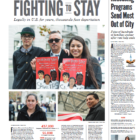
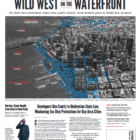
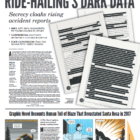
Issue No. 4 of the San Francisco Public Pressa broadsheet full-color local newspaper, will be available for just $1 at more than 50 retail outlets by Thursday, and now through online mail order ($4).

The special section this issue: a team project on the broken San Francisco budgeting process and ways to improve it. Angela Hart reports that in a time of fiscal austerity, many departments are ignoring audits that could save millions of dollars — including Muni, which was $20 million overbudget for overtime in the first month of the fiscal year. Michael Levitin reports on the rising trend of “participatory budgeting.”

Back issues of No. 1, 2 & 3 are also available.

The Spring edition featured an extensive report on the woes of Bay Area news media, drawing from an original survey of more than 700 journalists.

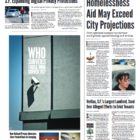
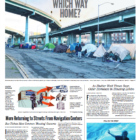
The fall 2010 edition included a report on Muni’s elusive quest for on-time service, a series of reports on the side effects of medical marijuana and updates on how sea level rise will affect the Bay. Also a creative choose-your-own-adventure full-page graphical feature on the future of Pier 70 redevelopment. See the front page (PDF).

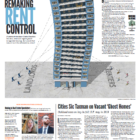
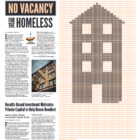
The Summer 2010 print edition featured a report about the redevelopment of Treasure Island, an exposé on the sale of questionable gemstones at Macy's and a map of the vacant and abandoned properties in the city.

Summer 2010 stories  |  Fall 2010 stories | Spring 2011 stories

Print Edition

America's Cup may be scaled-down, but transportation challenges are unchanged

Jerold Chinn, SF Public Press — Mar 28 2012 - 5:47pm

City scrambles to invent temporary bus and train lines for legions of yacht race spectators

A version of this story appears in the Spring 2012 print edition of the San Francisco Public Press.

The effect of a scaled-down America's Cup plan on an ambitious transit effort is unclear as the city continues to view the expected flood of visitors for America’s Cup pre-events this August and October as a chance to experiment with new transit options. On Tuesday, the San Francisco Board of Supervisors approved an agreement with America's Cup organizers that will put more of the spectator activity along the Marina Green. The transit plan for the game calls for an estimated 300,000 spectators around the waterfront — the equivalent of almost half the average weekday Muni ridership of 637,000 — city planners said they have to get nearly everyone out of cars to prevent transportation chaos.

State says lax rules might let builders use questionable licenses

Les Mahler, SF Public Press — Mar 26 2012 - 9:13am

This story appears in the Spring 2012 print edition of the San Francisco Public Press.

The agency overseeing companies that build houses and office buildings across California has for years trumpeted its ability to sniff out phony contractors, often publishing photos of dramatic undercover police stings of unlicensed builders at work on half-finished suburban cul-de-sacs. But now the agency, the Contractors State License Board, is looking into a problem of the state’s own making — a program that allows contractors to essentially lease out their licenses.

Supervisors tangle over whether to kill or change ranked-choice elections this year

T.J. Johnston, SF Public Press — Mar 21 2012 - 9:41am

This story appears in the Spring 2012 print edition of the San Francisco Public Press.

Opponents of the ranked-choice voting instant runoff system say he relatively novel approach is still confusing to voters, while foes of the traditional system that often results in a second runoff election is a waste of money. Dueling measure on how San Franciscans elect their top office holders by Supervisors David Campos and Mark Farrell could end up on the November ballot.

Bayview community garden program in peril as funding dries up

Leigh Cuen, SF Public Press — Mar 19 2012 - 12:05pm

Responding to food insecurity, neighbors cultivate network of plots to provide locally grown bounty and education

This story appears in the Spring 2012 print edition of the San Francisco Public Press.

The Quesada Gardens Initiative, which has helped green and revitalize one of San Francisco’s most economically neglected neighborhoods, is struggling to survive as funding is running dry. Formed in 2002 as a community-building effort by Bayview residents, it has gone on to transform portions of the community, spreading through vacant lots, backyards and community spaces. It has also begun to produce significant quantities of food for a neighborhood where the available of healthy options is limited.

City's health plan risks reverting to safety net for poor

Angela Hart, SF Public Press — Mar 15 2012 - 9:26am

Local, state officials must develop new models for care by 2014

This story appeared in the Spring 2012 print edition of the San Francisco Public Press.

San Francisco’s experiment in universal health care, which grew over the last five years to cover an estimated 85 percent of the city’s uninsured, may need to partly return to its origin as a network of safety net clinics and hospitals for the poor as national reforms syphon off middle-class patients. Healthy San Francisco provides medical services to more than 50,000 city residents. But the program could take a financial blow within the next two years as cities and counties adapt to national health reform.

Some San Francisco firms using legal loophole to skimp on health care cost

Barbara Grady, SF Public Press — Mar 12 2012 - 3:11pm

A version of this story appeared in the Spring 2012 print edition of the San Francisco Public Press.

It’s no wonder there is a hue and cry about an uneven playing field among businesses as they comply with San Francisco’s Health Care Security Ordinance. The law requires most employers to provide health care benefits to workers who put in at least eight hours a week. But an analysis of compliance reports submitted by 15 randomly selected employers to the city’s Labor Standards Enforcement Office finds that they spent wildly different amounts on health benefits per employee in 2010, the most recent year reported.

State labor agencies slow to coordinate with law enforcement on trafficking cases

Alejandra Cuéllar, El Tecolote / SF Public Press — Feb 27 2012 - 12:42pm

This special report appeared in the Spring 2012 print edition of the San Francisco Public Press.

Despite a strongly worded recommendation from a California-wide task force four years ago urging labor standards officials to look for signs of human trafficking, state and local investigators say there has so far been little coordination or direct follow-up with law enforcement or organizations supporting victims. The task force, which was disbanded in 2007 but is reconvening throughout this spring, outlined the need to identify and rescue victims — as opposed to deporting them in the course of routine labor enforcement sweeps.

California voter initiative would strengthen penalties for traffickers

Leigh Cuen, SF Public Press — Feb 24 2012 - 2:17pm

This special report appeared in the Spring 2012 print edition of the San Francisco Public Press.

California group dedicated to stopping human trafficking is hoping to take its fight directly to voters this fall. In January, the nonprofit advocacy group California Against Slavery began circulating petitions to get a measure on the November 2012 ballot to strengthen the state’s human trafficking laws. The measure is called the Californians Against Sexual Exploitation Act, and the campaign has mobilized hundreds of people around the state to collect the 800,000 valid signatures required for the measure to make the ballot.

Human trafficking is a growing global scourge

Andrew Lam, New America Media / SF Public Press — Feb 22 2012 - 12:28pm

This special report appeared in the Spring 2012 print edition of the San Francisco Public Press.

Slavery is alive and well in the 21st century. There are more people enslaved today than at any other time in history. The U.S. State Department says that estimates of those enslaved through human trafficking ranges from 4 million to 27 million.

U.S. visas help trafficking victims, if applicants can vault legal hurdles

Ambika Kandasamy, SF Public Press — Feb 21 2012 - 12:58pm

Chance for permanent residency, access to federal benefits hinge on cooperating with law enforcement

This special report appeared in the Spring 2012 print edition of the San Francisco Public Press.

A special visa created 12 years ago to save thousands of victims of human trafficking and curb international human trafficking has been vastly underutilized. Attorneys for rescued victims seeking residency protection say law enforcement agencies are often unwilling or slow to “certify” victims’ claims of having been brought to the U.S. to work by force, fraud or coercion. Legal experts and social service providers in high-trafficking regions, including the San Francisco Bay Area, suggest that victims are placed in a dangerous dilemma: Promising to cooperate with an investigation could possibly help their visa cases, but it could also expose them and their families back home to retaliation.

Syndicate content