Sequestration isn’t just some Washington abstraction. It’s hitting home.
The automatic federal budget cuts that rolled out on Friday — known as the sequester — are going to hurt the University of California, San Francisco. The world-class teaching hospital and research center receives funding from the National Institutes of Health. According to KQED’s “California Report,” the university’s vice chancellor for research, Keith Yamamoto, said that some laboratories have already instituted hiring freezes.
The blogs are picking up on the series of dominos that are going to hit a wide variety of social services. The Huffington Post San Francisco put together a slideshow on Bay Area services that will be forced to offer fewer services. Contra Costa’s Meals on Wheels program will lose $100,000.
San Francisco’s homeless activists predict a $1 million cut in federal funding, the San Francisco Bay Guardian reported.
* * *
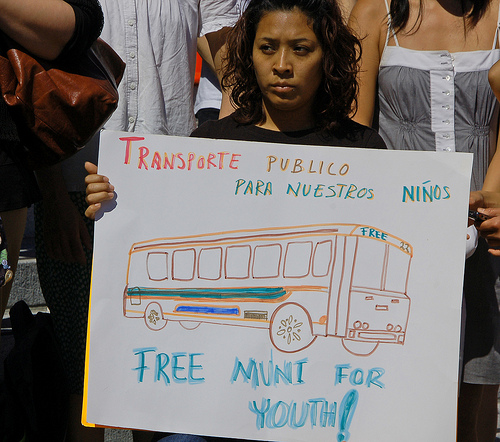
One area apparently free from the ripple effects of Washington budget cuts (so far): expanded free access to public transit for youth in San Francisco. Starting Friday, children 5 to 17 years old from low- to moderate-income households became eligible for a free Clipper Card, reports Mission Local.
San Francisco-based nonprofit People Organized to Win Employment Rights and community and civic leaders, including Supervisor David Campos, fought for months for the program, which will cost $8.7 million. It comes at a good time for students, since the San Francisco Unified School District’s yellow school bus system has slashed its bus service by 43 percent, Mission Local reported.
But support for the program — it’s for the children! — was not universal. The money had to come from somewhere, and in this case it resulted in deferred maintenance.
The Public Press reported last year that city supervisors debated whether it should use part of $6.7 million in federal funds from the regional Metropolitan Transportation Agency for the program — or buy new vehicles and upgrade Muni’s infrastructure.
“For decades, we as a city have severely underinvested in Muni,” Supervisor Scott Wiener said at a committee hearing last year. “There’s always a reason for diverting money away from Muni.”