Public health

City to tackle shelter waiting game for disabled and older homeless

T.J. Johnston, SF Public Press — May 15 2012 - 2:33pm

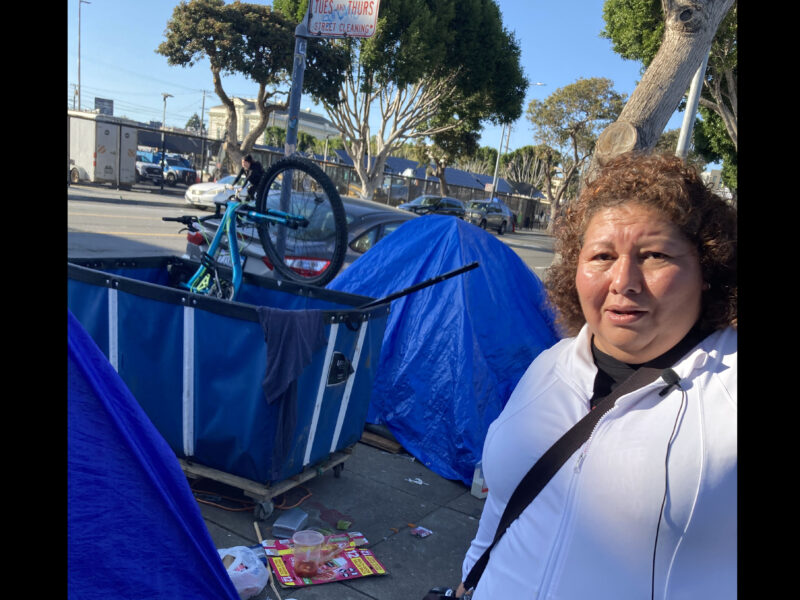
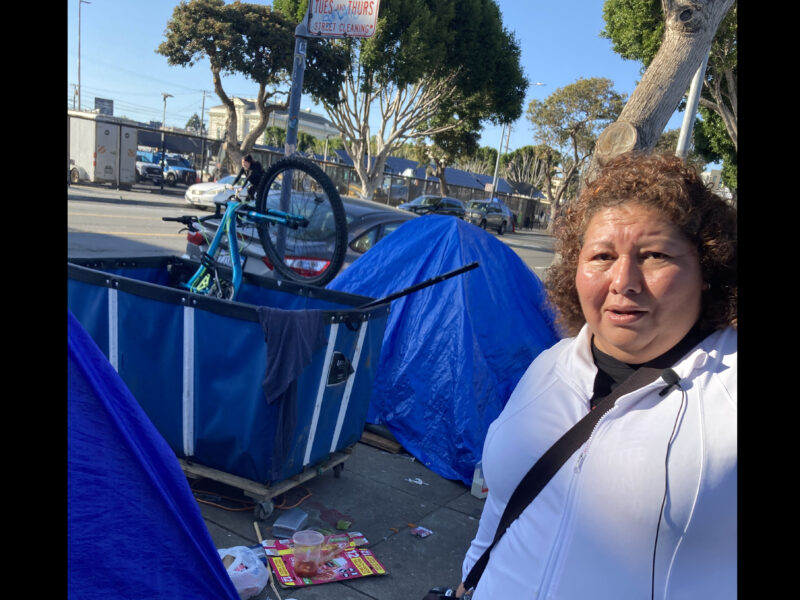
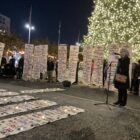
The health of homeless people — especially older and disabled ones — is endangered by a time-consuming wait they endure daily when reserving a bed in San Francisco’s public shelter system, advocates and city officials said recently. They told a Board of Supervisors panel that to solve the problem, the city is putting together a group of providers, city officials and clients, led by homeless policy director Bevan Dufty, to seek improvements in shelter access and the health of senior and disabled clients.

Chinatown death triggers worries about isolated seniors

Summer Chiang, New America Media — May 7 2012 - 4:30pm

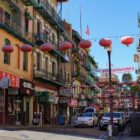
A tragedy happened in San Francisco’s Chinatown in mid-April. Yee-Shui Mar, 91, fell from a window in her apartment building. The Chinese-language newspaper Sing Tao Daily reported that Mar, who was from Taishan City in Guangdong province, lived alone. She had a married daughter and grandchildren living elsewhere.  

Tobacco brands zero in on black youth, study finds

Bernice Yeung, California Watch — Apr 23 2012 - 5:12pm

Tobacco marketing is targeting California's low-income and African American youth, according to researchers who examined advertising throughout the state. Academic researchers funded by the state’s Tobacco-Related Disease Research Program found that there was greater visibility of menthol cigarette advertising at retailers near high schools where there are larger African American student populations.

Bay Area program helps seniors, disabled live independently

Matt Perry, California Watch — Apr 18 2012 - 2:56pm

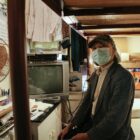
“I don’t know how any senior can handle all of this stuff,” sighs Mary Anne Humphrey, 68, who suffers from limited mobility due to a spinal cord injury. Humphrey is explaining the endless paperwork, social services, doctor appointments, benefit plans and medications she juggles as a disabled senior. Fortunately, Humphrey is one of 1,200 San Francisco County residents who have received help over the past five years from a unique Bay Area program that keeps older adults and the disabled living independently: the Community Living Fund.

City's health plan risks reverting to safety net for poor

Angela Hart, SF Public Press — Mar 15 2012 - 9:26am

Local, state officials must develop new models for care by 2014

This story appeared in the Spring 2012 print edition of the San Francisco Public Press.

San Francisco’s experiment in universal health care, which grew over the last five years to cover an estimated 85 percent of the city’s uninsured, may need to partly return to its origin as a network of safety net clinics and hospitals for the poor as national reforms syphon off middle-class patients. Healthy San Francisco provides medical services to more than 50,000 city residents. But the program could take a financial blow within the next two years as cities and counties adapt to national health reform.

Some San Francisco firms using legal loophole to skimp on health care cost

Barbara Grady, SF Public Press — Mar 12 2012 - 3:11pm

A version of this story appeared in the Spring 2012 print edition of the San Francisco Public Press.

It’s no wonder there is a hue and cry about an uneven playing field among businesses as they comply with San Francisco’s Health Care Security Ordinance. The law requires most employers to provide health care benefits to workers who put in at least eight hours a week. But an analysis of compliance reports submitted by 15 randomly selected employers to the city’s Labor Standards Enforcement Office finds that they spent wildly different amounts on health benefits per employee in 2010, the most recent year reported.

Healthy San Francisco: snapshot of universal care

Lisa Aliferis, KQED — Mar 1 2012 - 7:23pm

It’s been almost five years since San Francisco launched its innovative, universal health plan — Healthy San Francisco — and last night a panel of public health experts and care providers gathered at the Tenderloin’s Glide Foundation to provide a snapshot of how the program is faring. The panel was co-sponsored by the San Francisco Public Press (which produced a team reporting project on Healthy San Francisco in the Winter print edition and online), Glide and the UC Berkeley School of Public Health.

California drugmaker's HIV prevention pill sparks public health debate

Bernice Yeung, California Watch — Jan 30 2012 - 2:38pm

Foster City drugmaker Gilead recently updated its application with the federal Food and Drug Administration for approval to market its HIV treatment medication Truvada as an  HIV prevention pill. If the FDA approves Truvada for preventive use, it “would be the first agent indicated for uninfected individuals to reduce the risk of acquiring HIV through sex,” according to a company statement at the time of the filing in December 2011.

100% ad-free news for the 99%

Michael Stoll, SF Public Press — Dec 30 2011 - 3:15pm

In the Public Press, elites don’t dictate coverage

If you missed it, the Winter 2011 edition of the Public Press (Issue 5) went on sale in November, and it came on the heels of a national conversation about how to fund and fortify community journalism. This is the editorial on page 2.

Issue 5 of the San Francisco Public Press, an ad-free nonprofit local newspaper, takes cues from noncommercial magazines, some of which have become influential of late. One model was Adbusters, the “culturejammer” magazine that inspired the global Occupy movement. Our approach at the Public Press has always been to look for stories that see the city and the Bay Area from the viewpoint of average people instead of just the elites, whose concerns are well represented. While we don’t practice advocacy journalism, we do strive to cover, in depth, stories and communities that commercially funded media don’t often pay attention to.

As work conditions shift, inhumanity of immigrant labor becomes human rights concern

Alejandra Cuéllar, SF Public Press — Dec 27 2011 - 1:37pm

Gabriel Thompson worked alongside immigrants in the back of restaurants in New York City and in factories that produced some of the most basic foods in the American diet: lettuce and chicken. Not an immigrant himself, Thompson used his investigative reporting techniques to lift a veil on working conditions that many undocumented immigrants and low-income Americans face daily. His colleagues experienced excruciating soreness from physical labor. They had no employee benefits. And they had to do monotonous and repetitive work, which led to a high rate of injuries. Thompson’s one-year immersion into the lives of working immigrants, documented in his recent book, “Working in the Shadows,” comes at a time when working conditions are changing. The immigrant workers are leaving the workplace under pressure from law enforcement, a trend that is forcing the employers to look for new ways of attracting workers.

Syndicate content