
In a bid to make it easier for local businesses to grow in a down economy, San Francisco supervisors want to give more small, city-based firms a competitive edge in municipal contracts.
After months of discussions with city departments and advocacy groups, the Land Use and Economic Development Committee discovered that some departments were awarding contracts to out-of-town businesses that could have been awarded to local ones.
On Tuesday, the Board of Supervisors passed an ordinance that would ensure that no fewer than 50 percent of public-works and construction contracts worth up to $400,000, and 25 percent of other contracts worth up to $100,000, be awarded to Micro-Local Business Enterprises – or LBE’s.
The supervisors also created a new category of local businesses – SBA-LBE – that would qualify for a 2 percent bid discount on proposals in certain price ranges they submit to the city.
The city’s Human Rights Commission classifies small and micro businesses by their yearly gross receipts and type of industry. For example, $14 million for “small” construction contractors and $7 million for “micro” businesses.
“The city, for a very, very long time, has really been trying to track and monitor where our business goes and the truth of the matter is the city hasn’t done a very consistent job of getting those statistics from the Human Rights Commission and from departments,” said Carmen Chu, one of six supervisors who sponsored the legislation.
Local business owners told city officials that existing preferences for micro businesses ignored the needs of businesses that were somewhat bigger, but not large. But there wasn’t unanimity about the need to help an expanded class of local businesses, and some supervisors said this effort could hurt other small businesses.
“By creating a category of a larger type of business that can get some preference, you’re potentially making it more difficult for smaller businesses to compete,” said Supervisor David Campos, who requested to delay the vote for more deliberation.
Campos said micro business owners are concerned that they will suffer if the Human Rights Commission, which oversees the Local Business Enterprise certification process, experiences an increased caseload.
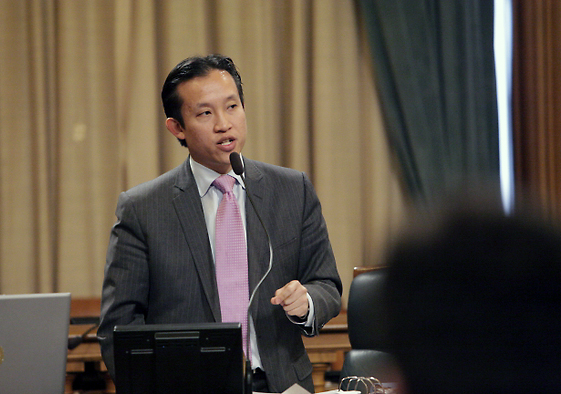
Supervisor David Chiu, one of the ordinance’s sponsors, said something had to be done to help out struggling small enterprises in the city.
“We’re trying to keep our business local,” he said.
Bayview contracts
Also on Tuesday, Supervisor Sophie Maxwell said she wanted to ensure Bayview firms are awarded contracts for the construction of the new Bayview library, which will be located on Third Street.
“It is imperative that projects like these, which will contribute so much to the quality of life in the neighborhood, also provide employment opportunities to local community,” Maxwell said.